
The Homebuyer’s Corner
Who Pays the Supplemental Property Tax Bill After Closing in California?
Written by Armando Novelo, NMLS 237243, a mortgage loan officer in West Covina helping Southern California buyers.
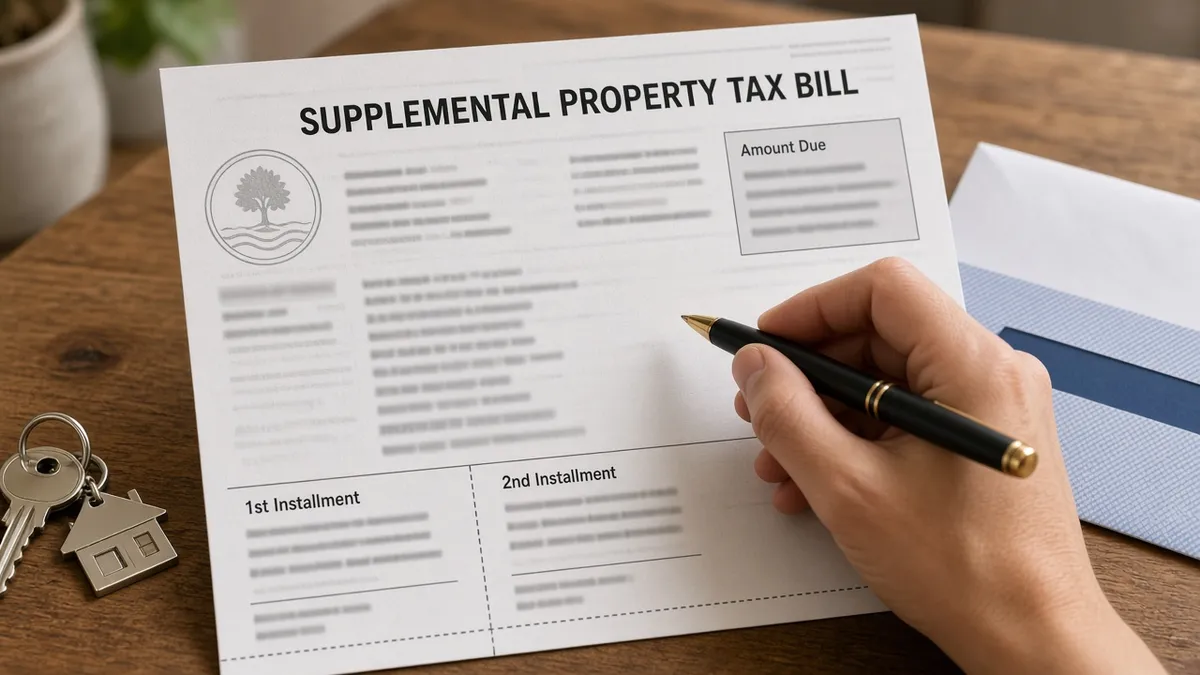
After a typical home purchase in California, the new owner is responsible for any supplemental property tax bill created by the reassessment after the sale. The county sends the bill directly to you, and your mortgage impound account generally will not automatically pay it.
A lot of buyers find this out the hard way. The house closes, the first payment goes out, life settles down. Then an envelope from the county shows up months later with a bill nobody mentioned.
What Happened When My Baldwin Park Client Got the Bill?
My client who closed on a house in Baldwin Park in March 2026 got a supplemental tax bill for about $1,800, and at first they thought it was their regular property tax bill.
It wasn't.
Their regular property taxes were already built into their mortgage payment through their impound account. The supplemental bill was separate, and it was theirs to pay.
They chose to pay the full amount at once. Other clients of mine have paid in installments instead, by the due dates printed on the bill. Either way, each installment needs to be paid in full and on time.
If your purchase causes the county to reassess the property at a higher value than the value already on the tax roll, you should expect one or more supplemental bills.
What Is a Supplemental Property Tax Bill?
A supplemental assessment is a one-time adjustment to your property taxes after certain changes in ownership or new construction. Depending on when you close, that assessment can produce one or two supplemental tax bills.
Under Proposition 13, a qualifying change in ownership generally establishes a new base-year value based on the property's current market value. The California State Board of Equalization explains that the county compares the new assessed value with the value already on the tax roll. The difference becomes the supplemental assessment.
The tax adjustment becomes effective on the first day of the month after the change in ownership.
If you close between June 1 and December 31, generally one supplemental bill is issued for the applicable period through June 30.
If you close between January 1 and May 31, two supplemental bills can be issued. One covers the remaining months of the current fiscal year, and the second covers the full following fiscal year beginning July 1.
The supplemental bill is in addition to your regular annual property tax bill. It does not replace it.
That is why it belongs in your homebuying budget alongside the other costs that come with purchasing a house. I break those down in What Are Closing Costs in California and How Much Are They?
Why Does the New Owner Pay Instead of the Seller?
The new owner generally pays because the supplemental assessment is created by the new value established after your purchase and applies to the period after you become the owner.
At closing, escrow normally prorates the regular annual property taxes between the buyer and seller based on the closing date.
The supplemental bill is different. The county usually has not completed the reassessment or issued that bill yet when escrow closes, so it is not simply another regular tax bill for escrow to divide.
If you want a broader breakdown of which costs are normally assigned to the buyer or seller at closing, see Who Pays Closing Costs and How Much?
Will My Impound Account Pay the Supplemental Tax Bill?
Usually, no.
The Los Angeles County Treasurer and Tax Collector says supplemental bills are sent directly to the property owner even when the homeowner has an impound account with a lender.
Your impound account is normally set up to handle the regular annual property tax bill. The lender does not automatically receive the original supplemental bill the way it may receive your regular tax information.
The mistake to avoid is setting the bill aside because you assume your lender already has it.
If you want to confirm whether your lender will make the payment, call them when the bill arrives. But don't let the due date pass while you wait.
The California State Board of Equalization specifically warns that a misunderstanding between the homeowner and lender is not a reason for late-payment penalties to be canceled.
When Will the Supplemental Tax Bill Show Up?
The supplemental tax bill often arrives months after closing because the county first has to process the change in ownership and establish the new assessed value.
You may receive a Notice of Supplemental Assessment before the actual tax bill.
There is no exact statewide delivery date I can promise you. Los Angeles County says processing supplemental bills generally takes around six months, while other counties warn that processing can sometimes take longer.
That delay is exactly why the bill catches people off guard. By the time it shows up, you've been in the house for months and the closing process feels long over.
Each bill has its own due dates printed on it.
Read it the day it arrives.
Can I Get Two Supplemental Tax Bills?
Yes.
If the ownership change occurs between January 1 and May 31, California's supplemental assessment system can generate two bills.
The first covers the remaining portion of the current fiscal year through June 30.
The second covers the entire following fiscal year beginning July 1.
If the ownership change occurs between June 1 and December 31, generally one supplemental bill is issued.
So getting a second envelope does not automatically mean the county made a mistake. It may be the second part of the same supplemental assessment cycle.
Can the Homeowners' Exemption Lower My Supplemental Bill?
Yes, if you qualify.
California's homeowners' exemption removes up to $7,000 of assessed value from taxation.
The State Board of Equalization explains that if the property was not already receiving the homeowners' exemption and you occupy the home as your principal residence within 90 days of purchasing it, you may qualify to have the exemption applied to the supplemental assessment.
The exemption amount is then prorated for the applicable period.
If the property was already receiving the full homeowners' exemption for the current year, you generally do not receive an additional exemption against that supplemental assessment. Your new claim can instead take effect for the next fiscal year.
File the homeowners' exemption with your county assessor after you move in.
It's also one of the things I recommend handling after you get the keys in What Should You Do the First Week After Buying a House?
For questions about how an exemption applies to your specific tax situation, talk with the county assessor or your tax professional.
How Do I Plan for the Supplemental Bill Before I Close?
Plan for it before you get the keys.
I tell my clients a supplemental bill may be coming, and when possible I give them the county's own tools so they can estimate it before the bill ever shows up.
If you're buying in Los Angeles County, use the county's Supplemental Tax Estimator.
If you're buying in Riverside County, use the Riverside County Supplemental Tax Estimator.
If you're buying in San Bernardino County, the Tax Collector's New Homeowner Information and tax-estimate tools can help you estimate the new tax amount.
These are estimates, not final bills. Your actual assessment, tax rate, closing date and any applicable exemptions can change the final amount.
Buying somewhere else in California? Check your county assessor or tax collector's website for its supplemental assessment information.
Zoom out.
The supplemental bill is basically the county catching the property taxes up to the home's new assessed value for the period that wasn't already reflected on the regular tax roll.
It isn't a surprise once you know to expect it.
And on a California home purchase, it can be real money worth setting aside.
It's one of the Hidden Costs First-Time Buyers Forget to Budget For.
Supplemental Tax Quick Answers
What Happens If I Pay a Supplemental Bill Late?
Late-payment penalties can apply if an installment is not paid by the delinquency date printed on the bill.
For example, San Bernardino County applies a 10% penalty to a delinquent supplemental installment and an additional charge to certain late second installments.
Follow the dates and instructions printed on your actual county bill because that is what controls your payment.
Does the Supplemental Bill Affect My Mortgage Payment?
Not directly when you receive the supplemental bill because you normally pay that bill separately to the county.
Later, your lender may review your impound account and adjust the amount being collected for property taxes once the property's regular annual tax bill reflects the new assessed value.
That can change the tax portion of your monthly mortgage payment.
Build My Path Home
Buying a home and trying to figure out what your real cash-to-close and after-closing costs could look like? Start with my buyer readiness quiz. If you're ready for the next step, you can pick a time to talk with me about your path toward buying a home.
Date published: November 4, 2026
Last reviewed: November 4, 2026
Armando Novelo, NMLS 237243, is a mortgage loan officer at Super Mortgage Bros, powered by Golden Empire Mortgage. He has been helping Southern California buyers and homeowners since 2002. His office is located in West Covina, CA. Call (626) 200-1838.

Links
Contact
Armando Novelo
NMLS 237243
Super Mortgage Bros
1900 W. Garvey Ave S. #100
West Covina, CA 91790
Phone: (626) 200-1838
I agree to be contacted by Super Mortgage Bros via call, email and text. To opt out, you can reply “stop” at any time or click the unsubscribe link in the emails. Message and date rates may apply.
Message frequency varies
© 2026 Super Mortgage Bros. Super Mortgage Bros. | All Rights Reserved | Licensed by the Department of Financial Protection and Innovation under the California Residential Mortgage Lending Act. Golden Empire Mortgage, Inc. ("GEM") [NMLS ID No. 2427] is a California corporation whose principal business office is located at 1200 Discovery Drive, Ste. 300, Bakersfield, California 93309. GEM is a residential mortgage lender and servicer Licensed by the Department of Financial Protection and Innovation under the California Residential Mortgage Lending Act. under license no. 413-0360. https://www.nmlsconsumeraccess.org