
The Homebuyer’s Corner
What Are Closing Costs in California and How Much Are They?
Written by Armando Novelo, NMLS 237243, a mortgage loan officer in West Covina with over 20 years of experience helping Southern California buyers.
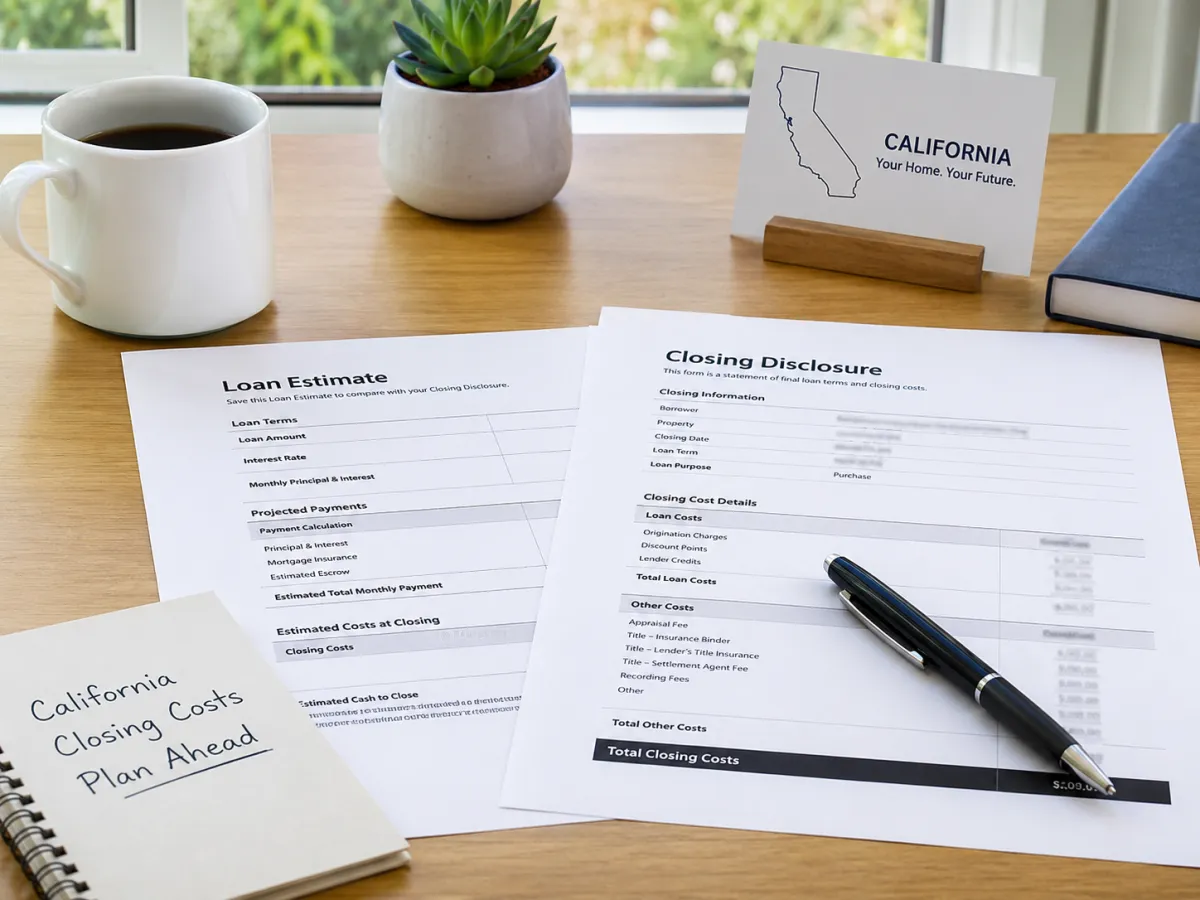
Closing costs are the fees and prepaid expenses required to finalize your home purchase. In California, buyers should plan for closing costs to run between 2 and 3 percent of the loan amount, separate from the down payment. On a $700,000 loan that is $14,000 to $21,000. On a $900,000 loan the range is $18,000 to $27,000.
That is real money and it is almost always the thing buyers are least prepared for. Not because nobody tells them closing costs exist, but because nobody explains what they actually are, why they are what they are, and how to plan for them without panicking when the escrow numbers land.
What Closing Costs Actually Cover
Closing costs are not a single fee. They are a collection of legitimate charges from multiple parties involved in the transaction, each doing a real job that makes your purchase possible.
Lender fees cover the cost of processing, underwriting, and approving your loan. These can include an origination fee, underwriting fee, and credit report fee. Lender fees vary meaningfully between lenders. Two buyers purchasing similar homes in the same city can have significantly different lender fees depending on which lender they chose and how that lender prices their services.
Title fees pay for the title search, which confirms the seller actually owns the property and that no liens or legal claims exist against it, and for title insurance, which protects you and your lender if a claim against the title surfaces later. Title insurance is a one-time premium paid at closing, not an ongoing monthly cost.
Escrow fees pay for the escrow company that acts as the neutral third party managing the money and documents for the transaction. In California, escrow is standard in almost every purchase and the fee is typically split between buyer and seller, though the split is negotiable.
Recording fees are the government's charge for officially recording the new deed in the county recorder's office. These are relatively small but real.
Prepaid items are different from the fees above because they are not charges for services rendered. They are your money being collected upfront. Your first year of homeowners insurance premium is collected at closing. Property taxes are prorated for the period you own the home before the next tax payment is due, and your escrow impound account is funded with several months of property tax and insurance reserves so the lender can make those payments on your behalf going forward. These are your dollars going into your account, not fees paid to someone else, but they are due at closing and need to be in your budget.
The Difference Between Closing Costs & the Down Payment
This is the distinction that blindsides more buyers than anything else in the process.
Your down payment is the equity you are putting into the property. Your closing costs are separate and paid on top of it. They do not count toward your down payment. They do not reduce your loan balance. They are the cost of completing the transaction.
A buyer planning to put 5 percent down on a $750,000 home is thinking about $37,500. That is real. What they also need is $15,000 to $22,500 in closing costs sitting separately in their account on top of that. Planning for the down payment and not the closing costs is one of the most common reasons deals get stressful late in escrow.
The buyers who go into the process knowing both numbers have smoother transactions. The buyers who discover closing costs for the first time when escrow sends the preliminary settlement statement are the ones who panic, even when they can afford it, because the surprise is the problem.
Can the Seller Pay My Closing Costs
Yes, and this is a strategy worth understanding before you write your offer, not after.
Seller concessions are a negotiated contribution from the seller toward your closing costs. They are written into the purchase contract as part of your offer. If the seller agrees to pay $10,000 toward your closing costs, that money offsets what you bring to the table at closing.
Seller concessions are most common when a home has been sitting on the market for a while, when the buyer is using a loan program that allows them, and when the offer is structured in a way that still makes the deal worthwhile for the seller. FHA loans allow seller concessions up to 6 percent of the purchase price. Conventional loans allow up to 3 percent with less than 10 percent down and up to 6 percent with larger down payments.
The mistake buyers make is treating seller concessions as an afterthought. If seller concessions are important to your budget, that needs to be part of your offer strategy from the beginning. A lender who understands your full financial picture can help you structure the offer accordingly.
How Down Payment Assistance Affects Closing Costs
Some down payment assistance programs apply only to the down payment. Others can be used toward closing costs as well. The distinction matters because a program that helps you cover your down payment but leaves you short on closing costs has only solved half the problem.
When I am reviewing assistance programs with buyers, I always look at both buckets. Down payment covered, closing costs covered, or partially covered. Then we figure out what the buyer still needs to bring to the table and whether additional programs, seller concessions, or lender credits can close that gap further. We covered how the different assistance program structures work in this article, specifically in the section on silent second loans and grants. And the broader landscape of what is available for SGV buyers is in this article, in the section on stacking programs.
When You See the Actual Numbers
Your lender is required to give you a Loan Estimate, that document shows an itemized breakdown of estimated closing costs. It is not a final number but it is a close approximation.
Closer to closing, typically three business days before your closing date, you receive the Closing Disclosure. This is the final, confirmed version of every number. If anything has changed materially from the Loan Estimate, it shows up here.
Read both documents. Ask questions about any line item you do not recognize. Not because the lender is hiding something, but because understanding what you are signing is the whole point of the process.
I worked with a couple in the SGV who had been pre-approved and were actively shopping. They came to me having worked with a previous lender who had never explained their Loan Estimate. They had received it, signed it because they were told to, and filed it away. When I walked them through what each line actually meant, they were surprised by some of the lender fee amounts they had agreed to and had not understood. They switched lenders before they went into contract. That is not a common outcome but it is a real one, and it would not have happened if they had understood the document the first time they saw it.
What Buyers Usually Underestimate
Three things come up consistently. If you have not yet read the full breakdown of everything buyers need to budget for beyond the down payment, this article covers all of it, specifically in the section on closing costs and the appraisal.
The first is the escrow impound account funding. When your lender sets up an impound account to pay taxes and insurance on your behalf, they collect several months of reserves at closing to cushion the account. Two to three months of property taxes and insurance can add several thousand dollars to your closing day total that buyers were not expecting.
The second is the timing of the first mortgage payment. Mortgage interest is paid in arrears. When you close on August 15th, you pay prepaid interest from the 15th through the end of August at closing. Then your first full mortgage payment is not due until October 1st, not September 1st. Buyers sometimes misread this as a payment being skipped. It is not. The interest for that period was already collected at closing.
The third is that escrow numbers can shift between the preliminary estimate and the final disclosure, usually modestly, as credits and prorations are calculated against the exact closing date. Build a small cushion into your closing cost budget rather than planning to the dollar.
Armando Novelo, NMLS 237243, is a mortgage loan officer at Super Mortgage Bros, powered by Golden Empire Mortgage. He has been helping Southern California buyers and homeowners since 2002. His office is located in West Covina, CA.
For more info, join my email list.
Article Published: August 11, 2026

Links
Contact
Armando Novelo
NMLS 237243
Super Mortgage Bros
1900 W. Garvey Ave S. #100
West Covina, CA 91790
Phone: (626) 200-1838
I agree to be contacted by Super Mortgage Bros via call, email and text. To opt out, you can reply “stop” at any time or click the unsubscribe link in the emails. Message and date rates may apply.
Message frequency varies
© 2026 Super Mortgage Bros. Super Mortgage Bros. | All Rights Reserved | Licensed by the Department of Financial Protection and Innovation under the California Residential Mortgage Lending Act. Golden Empire Mortgage, Inc. ("GEM") [NMLS ID No. 2427] is a California corporation whose principal business office is located at 1200 Discovery Drive, Ste. 300, Bakersfield, California 93309. GEM is a residential mortgage lender and servicer Licensed by the Department of Financial Protection and Innovation under the California Residential Mortgage Lending Act. under license no. 413-0360. https://www.nmlsconsumeraccess.org