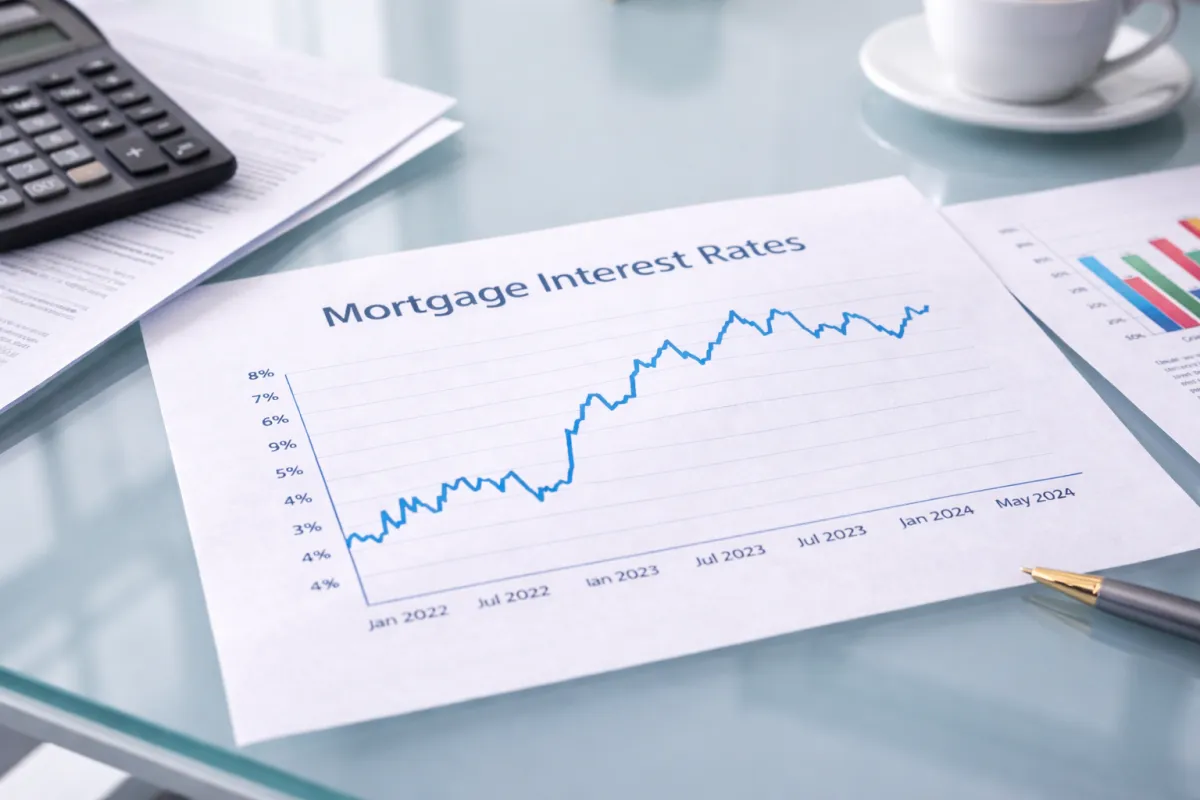
How Mortgage Interest Rates Are Set and What Affects Them
How are mortgage interest rates actually set?
Mortgage rates are set based on the overall bond market, investor demand, inflation expectations, and the risk of the loan, not by your lender picking a number.
That sounds abstract, so let me break it down in plain language.
Mortgage Rates Come From the Bond Market
Mortgage loans are bundled together and sold as bonds. Investors buy those bonds because they want steady returns.
When investors want more mortgage bonds, rates tend to go down. When investors pull back or demand higher returns, rates go up. This happens daily and sometimes hourly.
Your lender does not control this. They are reacting to what the market is doing in real time.
Inflation Plays a Big Role
Inflation affects how much future money is worth. If inflation is high, investors want higher interest rates to protect their returns.
When inflation cools, rates usually have room to settle. When inflation spikes, rates respond quickly.
This is why rates can change even when nothing in your personal life has changed.
The Federal Reserve Indirectly Affects Rates
The Fed does not set mortgage rates directly.
What the Fed controls is short term lending between banks. When the Fed raises or lowers those rates, it influences the economy and investor behavior.
Sometimes mortgage rates move before the Fed acts because the market is already reacting to expectations. Other times they move after.
This is why people get confused when they hear the Fed news and see rates go the opposite direction.
Your Loan Details Still Matter
The market sets the baseline, but your loan determines where you land inside that range.
Things like credit score, down payment, loan type, and occupancy all affect pricing. A buyer with strong credit and a simple loan usually gets better terms than someone with more risk layered in.
This does not mean bad credit equals bad options. It just means the pricing reflects risk.
Locking a Rate Freezes the Moment
When you lock a rate, you are freezing the market at that point in time for a set period.
If rates go up after you lock, you are protected. If rates go down, you do not automatically get the lower rate unless there is a renegotiation option.
This is why timing and communication matter so much during escrow.
Why Rates Feel Random
Rates can change for reasons that have nothing to do with headlines.
A jobs report, inflation data, global events, or investor sentiment can all move rates quickly. Sometimes rates move quietly without much news at all.
What people do not realize until they are in it is that rates are more reactive than predictive. They respond to information as it comes in.
How I Explain Rates To Clients
I do not try to predict rates. I explain how they work and help people make decisions based on their situation.
Some people need certainty and lock early. Others are comfortable watching the market. There is no single right move.
One Google review sums up how I approach it: “Armando explained everything in a way that finally made sense.”
Understanding how rates are set takes away a lot of anxiety. You stop chasing rumors and start focusing on what you can control.
For more info, join my email list.
