The Homebuyer’s Corner
CalHFA MyHome Assistance Program: How It Works for California First-Time Buyers
Written by Armando Novelo, NMLS 237243, a mortgage loan officer in West Covina with over 20 years of experience helping Southern California buyers.
The CalHFA MyHome Assistance Program can help eligible first-time homebuyers in California cover part of their down payment and closing costs through a deferred-payment junior loan. Armando Novelo uses MyHome when the monthly payment works for a buyer but the upfront cash needed to purchase is the bigger obstacle.
On a CalHFA FHA first mortgage, MyHome can provide up to the lesser of 3.5% of the purchase price or appraised value. With a CalHFA conventional first mortgage, it can provide up to the lesser of 3%.
For a lot of first-time buyers Armando meets, that is the real problem. You save, home prices move, life happens, and the number you were chasing keeps running ahead of you.
It's a moving target.
How Did a Baldwin Park Family Buy After Their Down Payment Savings Were Gone?
One Baldwin Park family Armando worked with had already been saving toward buying a home when there was a death in the family. The money they had set aside for their down payment ended up paying for the funeral.
When they came back to Armando, the question was not whether they still wanted to buy. It was whether losing those savings had ended their chance to do it.
It hadn't.
Armando structured their purchase using CalHFA MyHome with a CalHFA conventional first mortgage and paired it with a seller credit. MyHome helped with the money needed toward the purchase, while the seller credit helped cover eligible closing costs.
Together, the two strategies replaced much of the cash the family had expected to bring from savings.
They bought their home in Baldwin Park and became homeowners.
The lesson is not that every buyer can duplicate that exact structure. Every file is different. Income, credit, property, available programs and first-mortgage rules all matter.
The lesson is that losing your savings does not automatically mean losing your path to a home.
Sometimes the problem is not whether you can afford the house. It's figuring out how to structure the money needed to get there.
How Does the CalHFA MyHome Assistance Program Work?
MyHome is a junior loan that is used together with an eligible CalHFA first mortgage. It can help an eligible first-time buyer cover down payment and closing costs.
"Junior" means the MyHome loan sits behind the main mortgage.
"Deferred payment" means there is no required monthly payment on the MyHome subordinate loan while it remains deferred. MyHome is still a loan and must eventually be repaid according to CalHFA's program terms.
That distinction matters.
Armando does not look at MyHome by itself. He looks at the entire financing structure, including the first mortgage, monthly payment, cash needed at closing and what taking the subordinate loan means for the buyer later.
For buyers who want to understand the broader assistance landscape first, Armando's California Down Payment Assistance Programs page is the best starting point.
How Much Assistance Can You Get From CalHFA MyHome?
The amount depends on the CalHFA first mortgage being used.
With a CalHFA FHA first mortgage, MyHome currently allows assistance up to the lesser of 3.5% of the purchase price or appraised value.
With a CalHFA conventional first mortgage, MyHome currently allows assistance up to the lesser of 3% of the purchase price or appraised value.
CalHFA also allows MyHome to be paired with certain other CalHFA first-mortgage programs, including its USDA program, subject to the requirements of both programs.
Armando checks the current program guidelines instead of assuming that an assistance amount or loan combination that worked for one buyer will work for the next one.
Don't sleep on the details. With down payment assistance, the first mortgage and the assistance program have to work together.
Who Qualifies for CalHFA MyHome?
MyHome is designed for eligible first-time homebuyers purchasing a primary residence in California.
CalHFA currently requires MyHome borrowers to meet the program's first-time homebuyer definition, occupy the property as their primary residence, complete required homebuyer education and meet the applicable CalHFA income limit.
Non-occupant co-borrowers are not allowed with MyHome. That means a parent who will not live in the property cannot simply be added as a co-borrower to help the buyer qualify under this program.
The property also has to meet CalHFA and first-mortgage requirements. Eligible properties can include qualifying one-unit homes, condominiums, PUDs and manufactured housing.
Credit requirements can vary depending on the CalHFA first mortgage, mortgage insurer and lender requirements. That is why Armando reviews the actual file instead of giving every buyer one credit-score number and calling it a day.
Buyers who are working on their credit can also read Armando's What Credit Score Do I Need to Buy a House in California? guide before deciding they are not ready.
What Does "First-Time Homebuyer" Mean for CalHFA?
You do not necessarily have to be buying the first home you have ever owned.
CalHFA generally defines a first-time homebuyer as someone who has not owned and occupied a principal residence during the previous three years and has not lived in a home owned by a spouse during that period. CalHFA notes that exceptions may apply.
So if you owned a home years ago but have been out of homeownership for more than three years, you may still meet CalHFA's first-time buyer definition.
This is one of the misconceptions Armando hears all the time.
People hear "first-time buyer" and assume an old home purchase automatically disqualifies them forever.
Not necessarily.
What Are the CalHFA MyHome Income Limits for 2026?
CalHFA income limits depend on the county where you are buying and the program being used.
CalHFA updated its 2026 income limits for its first and subordinate mortgages effective June 30, 2026.
Armando intentionally does not hard-code the county dollar amounts into this article because those limits change. The current CalHFA income-limit page should be checked when your file is reviewed.
And use the county where you are buying, not necessarily the county where you live today.
There is another reason not to guess. How a mortgage program calculates income for eligibility can be different from how you would casually add up your paychecks yourself.
Armando would rather run the actual file than have somebody rule themselves out using the wrong number.
Do You Have to Take a Homebuyer Education Course for MyHome?
Yes. CalHFA requires homebuyer education and counseling for first-time buyers using MyHome.
Only one occupying first-time borrower on the loan has to complete the requirement.
For online education, CalHFA currently accepts eHome's eight-hour Homebuyer Education and Counseling course. The course includes a one-on-one counseling follow-up. Buyers can also complete qualifying live education in person or virtually through NeighborWorks America or a HUD-approved housing counseling agency.
Armando's advice is simple: do it early.
This is one of those things buyers do not realize until they are in it. They find the house, open escrow and suddenly have another requirement to finish while everything else is moving.
If you already know you are seriously considering CalHFA, getting the education handled ahead of time removes one more thing from the closing checklist.
Does the MyHome Loan Have a Monthly Payment?
No required monthly payment is due on the MyHome subordinate loan while it remains deferred.
But deferred does not mean free.
MyHome is a loan. CalHFA publishes the current MyHome interest rate separately from its first-mortgage rates, and program terms can change.
That is why Armando checks CalHFA's current rate sheet when reviewing a buyer's options instead of relying on an old rate printed in an article.
Your CalHFA first mortgage has its own rate and terms.
Keeping those two pieces separate matters because the first mortgage determines your regular mortgage payment, while MyHome is subordinate financing sitting behind it.
Can You Combine CalHFA MyHome With a Seller Credit?
Yes, when the transaction and first-mortgage rules allow it. MyHome and a seller credit can work together because they do not necessarily have to cover the same costs.
That is exactly what Armando did with the Baldwin Park family.
MyHome helped replace money they had expected to use toward the purchase. The negotiated seller credit helped cover eligible closing costs.
Seller credits are subject to the rules of the first mortgage and cannot simply be used for anything the buyer wants. The allowable amount can change based on loan type, occupancy, financing structure and the buyer's actual closing costs.
For example, conventional loans follow Fannie Mae's interested-party contribution rules, while FHA has its own seller-contribution limits and requirements.
Armando explains those rules in more detail in Can a Seller Pay My Closing Costs With an FHA, VA, or Conventional Loan?
The important part is not chasing the biggest possible seller credit.
It is figuring out how much credit your loan permits, how much you can actually use, and whether negotiating one improves your overall purchase strategy.
What Interest Rate Does CalHFA MyHome Have?
The MyHome subordinate loan and the CalHFA first mortgage are separate loans, so Armando looks at them separately.
CalHFA publishes the current MyHome subordinate-loan rate on its live rate sheet and publishes its first-mortgage rates separately.
Because rates and program terms can change, Armando does not want a buyer relying on an old number from an article when making a financing decision.
When Armando compares CalHFA options, he looks at the entire structure: the first-mortgage payment, assistance amount, subordinate financing and total cash needed to close.
Reducing the money needed upfront can be valuable.
But you still have to zoom out and make sure the whole structure makes sense.
How Do You Apply for CalHFA MyHome?
You do not apply directly to CalHFA for the mortgage.
CalHFA works through approved private lenders and loan officers that offer its mortgage products.
Armando works with buyers using CalHFA programs and reviews the pieces that determine whether MyHome actually makes sense: income, credit, available cash, first-mortgage options, property type and the buyer's longer-term goals.
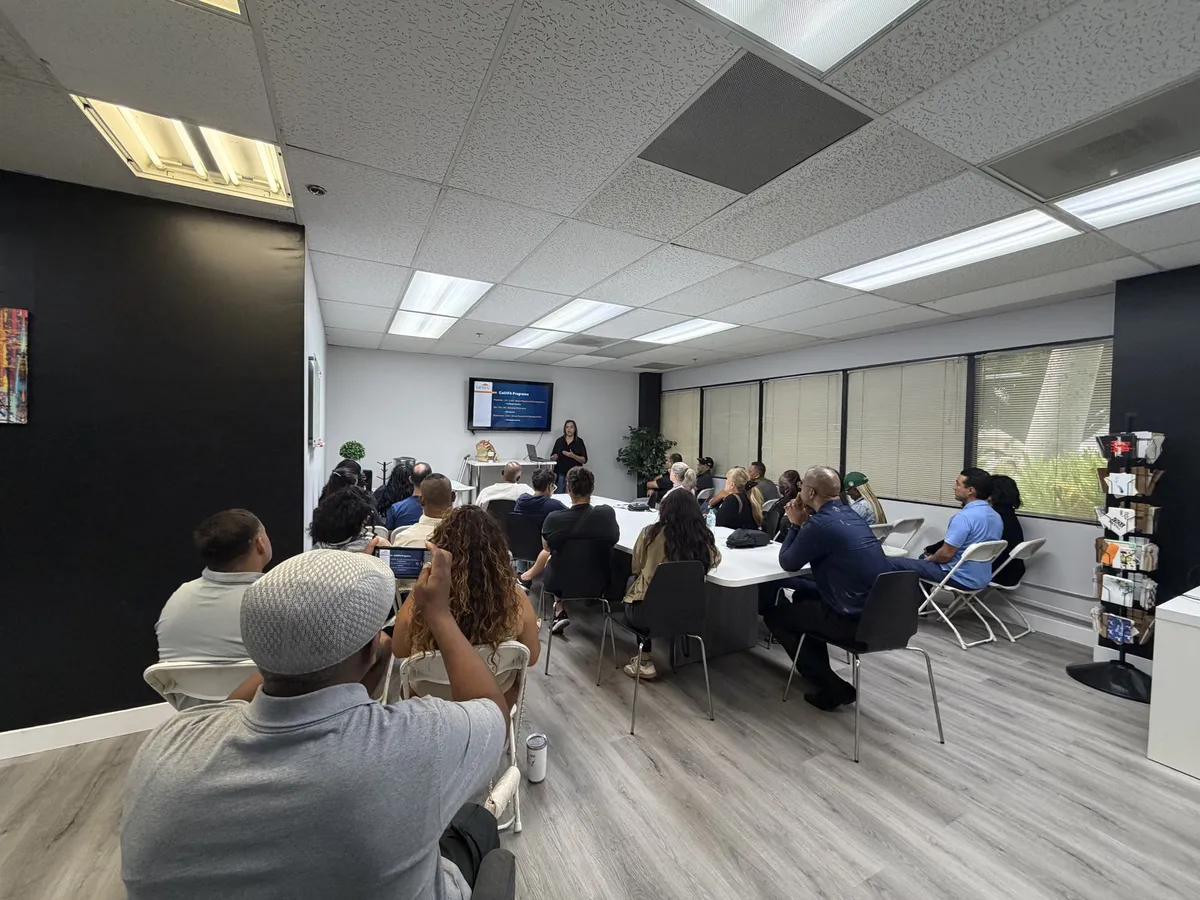
He also brings that education directly to local buyers. In October 2026, a CalHFA representative joined Armando at his West Covina homebuyer workshop so buyers could hear about the programs and ask questions directly.
That is part of why Armando teaches these programs instead of simply telling every buyer to use one.
MyHome will not be the best answer for everybody.
But if the down payment is what has been keeping you on the sidelines, it deserves a real look before you decide buying is out of reach.
CalHFA MyHome Quick Answers
Can a Parent Co-Sign on MyHome if They Will Not Live in the Home?
No. CalHFA does not allow non-occupant co-borrowers with MyHome. The borrowers using the program must meet the applicable occupancy requirements.
Can MyHome Be Used With a CalHFA USDA Loan?
Yes. CalHFA states that its USDA first mortgage can be combined with MyHome. USDA eligibility and income requirements also apply, and the more restrictive applicable guideline controls when program requirements differ.
What Credit Score Do I Need for MyHome?
There is not one universal MyHome credit-score answer that applies to every transaction. The applicable CalHFA first mortgage, mortgage insurer and lender requirements also matter, so Armando reviews the complete borrower profile before recommending a program.
Build My Path Home
Not sure where you stand?
Start with my buyer readiness quiz. If you're ready for the next step, you can pick a time to talk with me about your path toward buying a home.
Article Published: October 21, 2026
Last modified: October 28, 2026
Last reviewed: October 28, 2026
Links
Contact
Armando Novelo
NMLS 237243
Super Mortgage Bros
1900 W. Garvey Ave S. #100
West Covina, CA 91790
Phone: (626) 200-1838
I agree to be contacted by Super Mortgage Bros via call, email and text. To opt out, you can reply “stop” at any time or click the unsubscribe link in the emails. Message and date rates may apply.
Message frequency varies
© 2026 Super Mortgage Bros. Super Mortgage Bros. | All Rights Reserved | Licensed by the Department of Financial Protection and Innovation under the California Residential Mortgage Lending Act. Golden Empire Mortgage, Inc. ("GEM") [NMLS ID No. 2427] is a California corporation whose principal business office is located at 1200 Discovery Drive, Ste. 300, Bakersfield, California 93309. GEM is a residential mortgage lender and servicer Licensed by the Department of Financial Protection and Innovation under the California Residential Mortgage Lending Act. under license no. 413-0360. https://www.nmlsconsumeraccess.org