
The Homebuyer’s Corner
How Do HOAs Work When You Buy a Condo in California?
Written by Armando Novelo, NMLS 237243, a mortgage loan officer in West Covina with over 20 years of experience helping Southern California buyers.
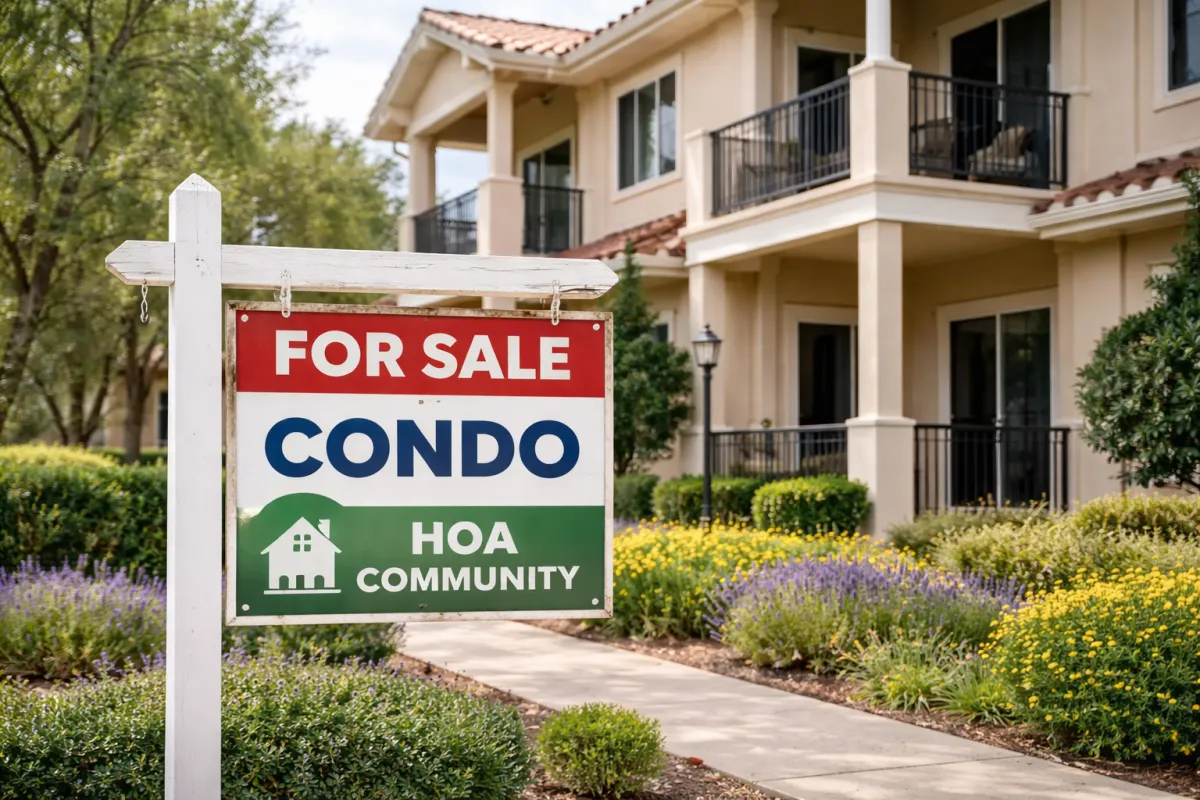
An HOA, or homeowners association, manages the shared spaces and rules for a condo community. But when you are buying a condo with a mortgage, the HOA does not just affect how you live there. It affects whether you can get the loan at all.
This surprises a lot of buyers. They spend weeks finding the right unit, getting pre-approved, falling in love with the place, and then somewhere in escrow they find out the condo project itself has a problem. Not them. The building.
That is a very different situation than buying a single family home, where the property approval is mostly about the condition of the house. With condos, the HOA's financial health, insurance, reserve funds, and ownership ratios all go under the microscope. And if they do not pass, the deal falls apart regardless of how qualified the buyer is.
What Lenders Actually Look at When You Buy a Condo
When you apply for a mortgage on a condo, your lender has to approve two things. You and the project.
Approving you means reviewing your credit, income, assets, and debt. That part is the same as any other purchase. Approving the project means reviewing the HOA's financials, insurance coverage, reserve fund balance, the percentage of units that are owner-occupied versus rented out, and whether there is any active litigation against the HOA.
For FHA loans, the condo complex has to be on the FHA approved condo list. Fannie Mae and Freddie Mac have their own approval requirements for conventional loans. If the project does not meet those standards, the loan program does not work. Period.
Most buyers do not find this out until they are already in contract. I check it on day one.
What Is a Non-Warrantable Condo
This is the term you need to know before you start shopping for condos.
A non-warrantable condo is a unit in a project that does not meet standard Fannie Mae, Freddie Mac, or FHA guidelines. That means it cannot be financed through a conventional or FHA loan. Your options become limited to portfolio loans or non-qualified mortgage products, and those come with higher rates, larger down payment requirements, and stricter terms.
Several things can make a condo non-warrantable. Too many units in the building are being rented out instead of owner-occupied. The HOA has insufficient reserves to cover major repairs. There is active or pending litigation involving the HOA. The building has significant deferred maintenance. One entity owns too many units in the project.
None of these are things the seller is required to disclose upfront. And none of them show up in the listing photos.
Here is what I see happen regularly. A buyer finds a condo priced noticeably below similar units in the same area. They assume they found a deal. What they actually found is a non-warrantable property that cash buyers and non-QM borrowers are the only ones who can purchase. The price is lower because the buyer pool is smaller. That is not a deal. That is a warning sign.
HOA Dues Are Not the Whole Story
Most buyers focus on the monthly HOA fee when they are evaluating a condo. That is understandable. It directly affects your monthly payment and therefore what you qualify for.
But the fee is not the most important thing to look at. The reserves are.
The reserve fund is the HOA's savings account for major future expenses. A new roof. An elevator replacement. Repaving the parking structure. When reserves are underfunded, one of two things happens. Either the repair does not get done and the building deteriorates, or the HOA levies a special assessment, which is a one-time charge to all owners to cover the cost. Special assessments can run into the thousands. Sometimes tens of thousands.
A well-funded reserve does not guarantee a perfect HOA. But an underfunded one is a red flag worth taking seriously before you buy.
What to Check Before You Make an Offer on a Condo
There are a few things I always want to know before my clients go too deep on a condo purchase.
Is the project FHA or Fannie Mae approved? This tells you immediately whether standard financing is available.
What is the owner-occupancy ratio? Most conventional programs want to see at least 50 percent of units owner-occupied. FHA has similar requirements. If a building is heavily renter-occupied, financing options shrink.
What does the reserve study show? HOAs are required to conduct periodic reserve studies that project future maintenance costs and assess whether current funding is adequate. You can request this document.
Is there any active litigation? An HOA involved in a lawsuit, whether against the builder, a contractor, or a resident, can make the project unfinanceable until it is resolved.
Are there any special assessments pending? If the HOA is about to charge owners for a major repair, you want to know that before you close.
Your agent should be pulling the HOA documents as early as possible in the process. If they are not, ask for them. A little homework upfront saves a lot of pain later.
The Real Reason This Matters in the SGV
Condos are one of the more accessible entry points into homeownership in the San Gabriel Valley, especially for first-time buyers who cannot yet stretch to a single family home. Prices for condos in cities like West Covina, Covina, El Monte, and Alhambra are generally lower than single family homes in the same market.
But accessible does not mean simple. The HOA layer adds real complexity to the purchase process that single family home buyers never deal with. Understanding it before you start shopping saves you from falling in love with a unit that cannot be financed with the loan you planned to use.
If you are weighing whether a condo or a single family home makes more sense for your situation, that is a longer conversation worth having based on your specific numbers and goals.
For more info, join my email list.
Article Published: April 13, 2026
Links
Contact
Armando Novelo
NMLS 237243
Super Mortgage Bros
1900 W. Garvey Ave S. #100
West Covina, CA 91790
Phone: (626) 200-1838
I agree to be contacted by Super Mortgage Bros via call, email and text. To opt out, you can reply “stop” at any time or click the unsubscribe link in the emails. Message and date rates may apply.
Message frequency varies
© 2026 Super Mortgage Bros. Super Mortgage Bros. | All Rights Reserved | Licensed by the Department of Financial Protection and Innovation under the California Residential Mortgage Lending Act. Golden Empire Mortgage, Inc. ("GEM") [NMLS ID No. 2427] is a California corporation whose principal business office is located at 1200 Discovery Drive, Ste. 300, Bakersfield, California 93309. GEM is a residential mortgage lender and servicer Licensed by the Department of Financial Protection and Innovation under the California Residential Mortgage Lending Act. under license no. 413-0360. https://www.nmlsconsumeraccess.org