The Homebuyer’s Corner
Can I Use My 401k to Buy a House in California?
Written by Armando Novelo, NMLS 237243, a mortgage loan officer in West Covina with over 20 years of experience helping Southern California buyers.
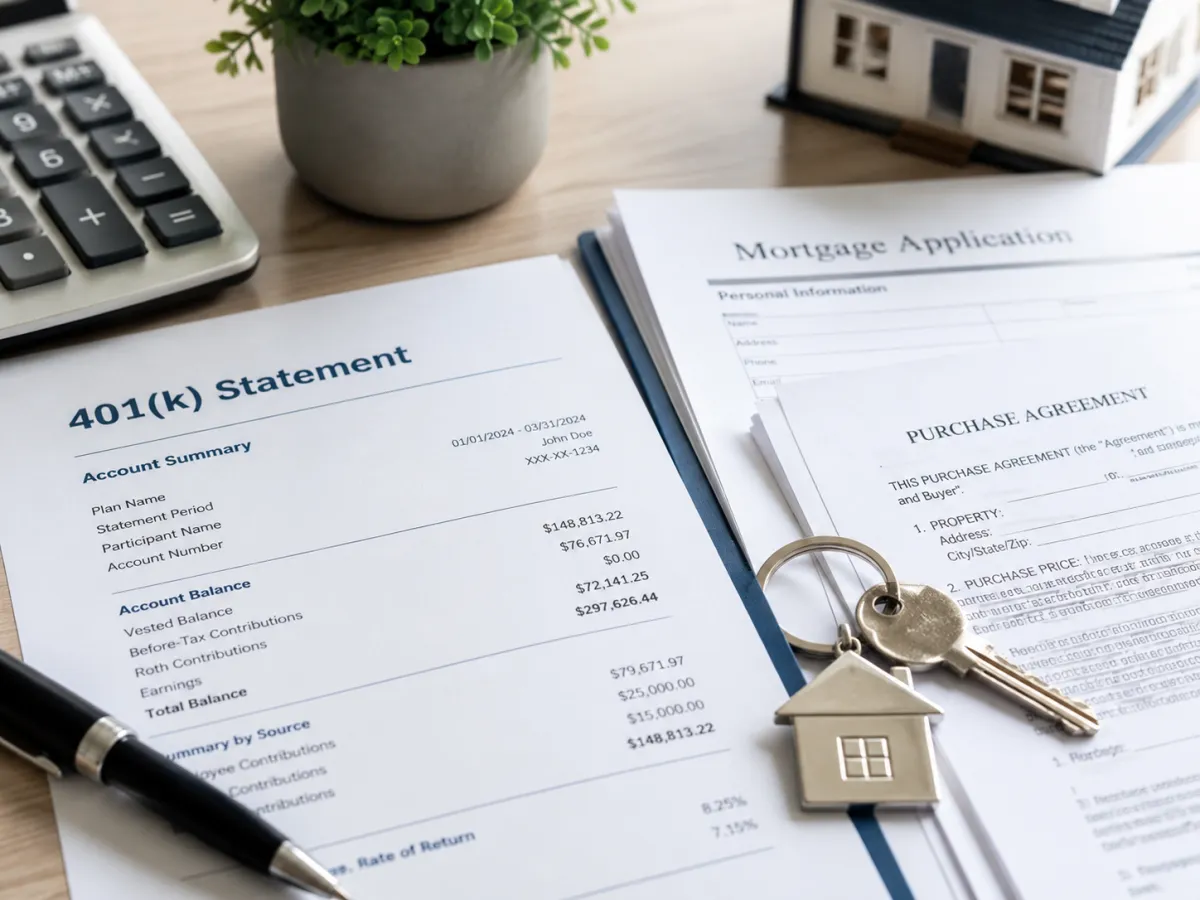
Yes. You can use money from your 401(k) to help buy a home in California.
But there is an important question to answer first: How are you taking the money out?
There are two common ways to use a 401(k) for a home purchase:
You can borrow from it with a 401(k) loan.
You can take money out with a withdrawal.
Those may sound similar, but they work very differently.
With a loan, you are borrowing the money and paying it back into your retirement account.
With a withdrawal, the money comes out of your retirement account and does not get paid back.
That difference can affect your taxes, your retirement savings, and even how your lender looks at the money.
Here is what you should know before touching your 401(k).
The 401k Loan: Borrowing From Your Retirement Account
Some 401(k) plans allow you to borrow against the money you have already saved. Generally, you may be able to borrow up to 50 percent of the portion of the account that belongs to you, with a maximum loan of $50,000. The actual amount available depends on your specific 401(k) plan and whether you already have another loan against the account.
Most 401(k) loans have to be paid back within five years.
There is an important exception for homebuyers. If the loan is being used to purchase your main home, your 401(k) plan may allow you more than five years to pay it back. The payments are usually taken directly from your paycheck.
One benefit is that a properly set up 401(k) loan is generally not treated like taxable income when you take the money out. You are borrowing the money, not permanently withdrawing it. The interest you pay on the loan also generally goes back into your own retirement account.
But there is still a cost to think about.
While that money is out of your 401(k), it may not be invested the same way it was before. That means you could miss some of the investment growth you would have received if the money had stayed in the account. So even though you are borrowing from yourself, the loan is not completely free.
Does a 401(k) Loan Hurt How Much House You Can Qualify For?
This is where I want buyers to be careful because the answer is not always what people assume.
A 401(k) loan does not automatically mean your lender has to count that payment against you when qualifying for a mortgage. For example, under Fannie Mae conventional loan guidelines, a loan that is secured by your 401(k) generally does not have to be included in your monthly debt when the lender properly documents that the 401(k) is securing the loan.
In plain English, that means the 401(k) loan payment may not reduce how much you qualify for on certain conventional loans.
Other loan programs and lenders can have different rules. That is why I always recommend talking to your lender before taking the 401(k) loan.
Do not move the money first and ask questions later. Let your lender look at the mortgage program you are using and tell you exactly how the 401(k) loan will be handled.
What Happens to a 401(k) Loan If You Leave Your Job?
This is another part people sometimes miss.
Your 401(k) is connected to your employer's retirement plan. If you leave that employer while you still have a loan outstanding, what happens next depends on the rules of that particular plan. Some plans may require you to pay back the remaining balance.
If the loan is not handled correctly, the unpaid amount can eventually be treated like money that was withdrawn from the account. That could create income taxes and, depending on your age and situation, an additional early-withdrawal tax.
There may be options for handling the remaining balance after leaving an employer, but the rules can get very specific.
The simple takeaway is this:
If there is a chance you may leave your job soon, find out what your 401(k) plan requires before borrowing from it. A quick call to the company that manages your retirement plan can answer that question.
The 401k Withdrawal: Taking the Money Out
A withdrawal is different because you are permanently taking money out of the account.
Some 401(k) plans allow withdrawals for expenses connected to buying your main home. But there is an important tax issue to understand.
Using the money to buy a home does not automatically mean you avoid the 10 percent federal early-withdrawal tax.
If you are younger than 59½, that additional tax may apply unless you qualify for another exception.
You may have heard about a first-time-homebuyer exception for retirement money. That rule can apply to certain IRA withdrawals, but it does not generally give you the same exception with a regular 401(k).
You may also owe regular income taxes on the amount you withdraw. That means taking $30,000 out of your 401(k) does not necessarily mean you will have the full $30,000 available for the home purchase. A tax professional can help you understand what would apply in your situation.
There is also the retirement side to think about. Once the money is permanently removed, it is no longer sitting in the account growing for your future. That does not mean using retirement money to buy a home is always a bad idea. It just means you should know the full cost before making the decision.
How a Couple in the SGV Used a 401k Loan as a Bridge
The most effective use of a 401k loan I have seen is as temporary bridge funding, not as a permanent down payment source. Here is a real example of how a 401(k) loan can work when there is a clear plan behind it.
A couple I worked with wanted to move from Covina to a new home in San Dimas. They needed money for the down payment, but they did not want to sell their Covina home first and then feel rushed to find another property and risk not having a place to go.
Each spouse borrowed $50,000 from their individual 401k plans, giving them $100,000 for the down payment on a $900,000 home.
They bought the San Dimas home and moved in. Then they prepared the Covina property and sold it.
When that home sold, they received approximately $525,000. They used $100,000 of those proceeds to pay back the two 401(k) loans. That left approximately $425,000, which they put toward the new mortgage. Then they requested a mortgage recast.
This was a buy before you sell strategy.
You can read the full breakdown of how this transaction came together in this case study.
What Is a Mortgage Recast?
A mortgage recast is not a refinance.
You keep your existing loan and interest rate.
After making a large payment toward the balance, the lender recalculates your monthly payment based on the smaller amount you now owe. In this case, after putting approximately $425,000 toward the mortgage and completing the recast, the couple's monthly payment dropped by just under $2,700.
The important part is that the 401(k) loans had a specific purpose and a clear plan for repayment.
That is very different from borrowing money from a 401(k) without knowing how you will replace it.
What Will Your Lender Need to See?
401(k) money can be an acceptable source for a down payment and closing costs. Your lender just needs to document where the money came from.
If you use a 401(k) loan, they may ask for:
-Your 401(k) statement
-Loan paperwork
-The amount borrowed
-Proof that the money was transferred
-If you use a withdrawal, they may ask for:
-Your 401(k) statement
-Proof of the withdrawal
-Proof of the money being transferred into the account you are using for the purchase
You may also hear that the money has to sit in your bank account for 60 days before you can use it.
That is not a universal rule.
If the lender can properly document where the retirement money came from, it does not necessarily have to sit untouched in your bank account for two months.
Talk to your lender before moving the funds so the paper trail is clean from the beginning.
Do You Really Need to Use Your 401(k)?
This is one of the most important questions to ask.
Some buyers think they need to take a large amount out of retirement because they believe they need 20 percent down. But you do not need 20 percent down to buy a home in many situations.
Depending on the loan program, you may be able to buy with 3 percent, 3.5 percent, 5 percent, or another amount. There may also be a down payment assistance program that could reduce how much cash you need.
Before taking money out of your retirement account, run the numbers first. You may find out you do not need to use as much of your 401(k) as you thought. We addressed the 20 percent myth in detail in this article, in the section showing what buyers actually need at different price points.
Before You Touch Your 401(k), Talk to These Three People
If you are considering a 401k loan or withdrawal to fund a home purchase, talk to two people before you do anything. Your plan administrator to understand the specific rules of your plan, because they vary significantly, and your lender to understand exactly how the funds will be documented and how the repayment obligation will affect your qualification.
Both of those conversations are free. Both of them take less than 30 minutes.
And both of them might reveal that you have options you had not considered, including down payment assistance programs that could reduce or eliminate the need to touch your retirement account at all. We covered the full landscape of what is available in this article, in the section on how city, county, and state programs can be stacked.
Your retirement account is real wealth you have already built. Accessing it for a home purchase can be the right move. Just make sure it is a decision made with all the information, not the first solution you reached for because it was there.
The Bottom Line
Yes, you can use your 401(k) to help buy a house in California.
A 401(k) loan lets you borrow the money and pay it back.
A withdrawal permanently removes the money and may come with taxes and an additional early-withdrawal tax.
Neither option is automatically good or bad.
What matters is how much you actually need, what it will cost you, and what your plan is afterward.
Before moving the money, make sure you understand the full picture.
Armando Novelo, NMLS 237243, is a mortgage loan officer at Super Mortgage Bros, powered by Golden Empire Mortgage. He has been helping Southern California buyers and homeowners since 2002. His office is located in West Covina, CA.

Article Published: August 27, 2026
Date Modified: September 9, 2026
Links
Contact
Armando Novelo
NMLS 237243
Super Mortgage Bros
1900 W. Garvey Ave S. #100
West Covina, CA 91790
Phone: (626) 200-1838
I agree to be contacted by Super Mortgage Bros via call, email and text. To opt out, you can reply “stop” at any time or click the unsubscribe link in the emails. Message and date rates may apply.
Message frequency varies
© 2026 Super Mortgage Bros. Super Mortgage Bros. | All Rights Reserved | Licensed by the Department of Financial Protection and Innovation under the California Residential Mortgage Lending Act. Golden Empire Mortgage, Inc. ("GEM") [NMLS ID No. 2427] is a California corporation whose principal business office is located at 1200 Discovery Drive, Ste. 300, Bakersfield, California 93309. GEM is a residential mortgage lender and servicer Licensed by the Department of Financial Protection and Innovation under the California Residential Mortgage Lending Act. under license no. 413-0360. https://www.nmlsconsumeraccess.org